Image
biggest tech breakthroughs
CSAIL article

Given that our smartphones have largely become appendages over the last decade, it’s hard to imagine that ten years ago there was no Instagram, Uber, TikTok or Tinder. The ways we move, shop, eat and communicate continue to evolve thanks to the technologies we use. It can be easy to forget how quickly things have changed - so let’s turn back the clocks and reminisce about some of the computing breakthroughs that have transformed our lives in the ’10s.

Image
MIT Schwarzman College of Computing
MIT news article

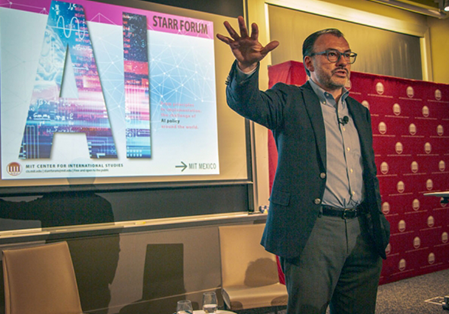
Jointly part of the School of Engineering and Schwarzman College of Computing, EECS is now composed of three overlapping sub-units in electrical engineering (EE), computer science (CS), and artificial intelligence and decision-making (AI+D), which brings together computer science-heritage AI and machine learning with electrical engineering-heritage information and decision systems to exploit their significant synergies. The department will remain responsible for Course 6.

Image
Julie Shah
MIT news article

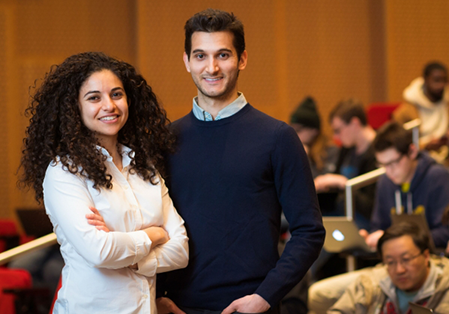
The road to commencement is a long one, especially for graduate students whose degree programs may take upwards of six years. There are many moments when focus may be lost and excitement may dwindle. Faculty mentors can play a key role in helping students persevere.

Image
medical image analysis
MIT news article

MIT researchers have devised a method that accelerates the process for creating and customizing templates used in medical-image analysis, to guide disease diagnosis.  

One use of medical image analysis is to crunch datasets of patients’ medical images and capture structural relationships that may indicate the progression of diseases. In many cases, analysis requires use of a common image template, called an “atlas,” that’s an average representation of a given patient population. Atlases serve as a reference for comparison, for example to identify clinically significant changes in brain structures over time.

Image
object recognition
MIT news article

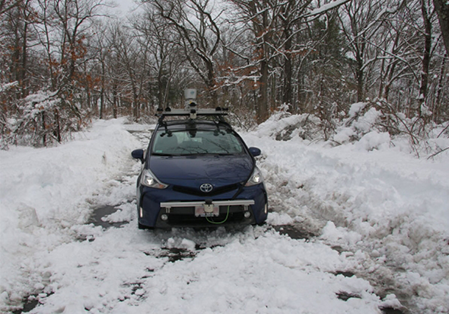
Computer vision models have learned to identify objects in photos so accurately that some can outperform humans on some datasets. But when those same object detectors are turned loose in the real world, their performance noticeably drops, creating reliability concerns for self-driving cars and other safety-critical systems that use machine vision.