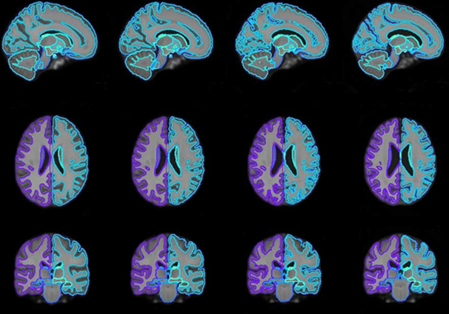
MIT researchers have devised a method that accelerates the process for creating and customizing templates used in medical-image analysis, to guide disease diagnosis.
One use of medical image analysis is to crunch datasets of patients’ medical images and capture structural relationships that may indicate the progression of diseases. In many cases, analysis requires use of a common image template, called an “atlas,” that’s an average representation of a given patient population. Atlases serve as a reference for comparison, for example to identify clinically significant changes in brain structures over time.
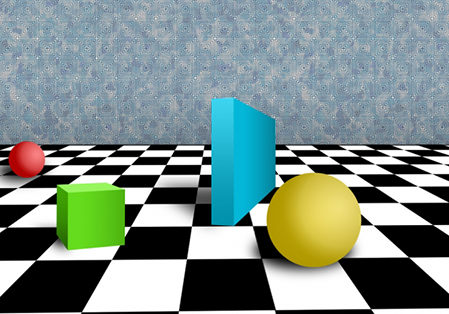
MIT researchers have designed a model that demonstrates an understanding of some basic “intuitive physics” about how objects should behave. The model could be used to help build smarter artificial intelligence and, in turn, provide information to help scientists understand infant cognition.
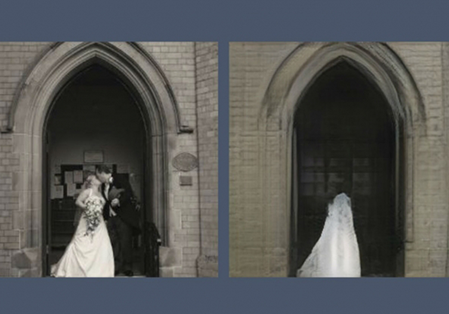
Cameras and computers together can conquer some seriously stunning feats. Giving computers vision has helped us fight wildfires in California, understand complex and treacherous roads — and even see around corners.
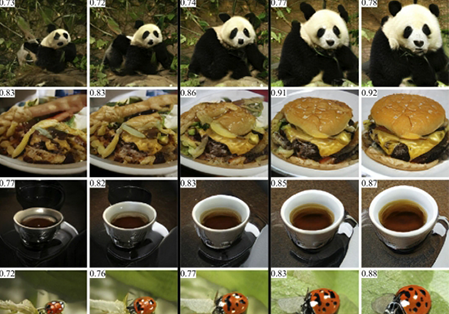
Computer vision models have learned to identify objects in photos so accurately that some can outperform humans on some datasets. But when those same object detectors are turned loose in the real world, their performance noticeably drops, creating reliability concerns for self-driving cars and other safety-critical systems that use machine vision.
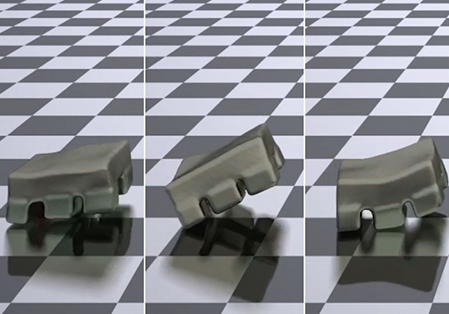
MIT researchers have invented a way to efficiently optimize the control and design of soft robots for target tasks, which has traditionally been a monumental undertaking in computation.
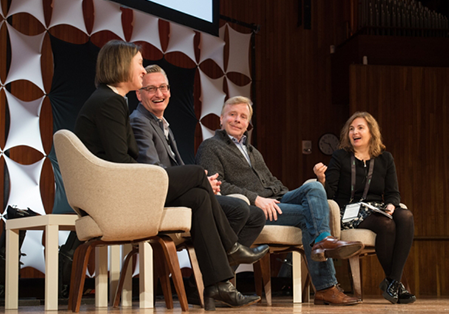
In opening the AI and the Work of the Future Congress, MIT Professor Daniela Rus presented diverging views of how artificial intelligence will impact jobs worldwide.
By automating certain menial tasks, experts think AI is poised to improve human quality of life, boost profits, and create jobs, said Rus, director of the Computer Science and Artificial Intelligence Laboratory (CSAIL) and the Andrew and Erna Viterbi Professor of Electrical Engineering and Computer Science.
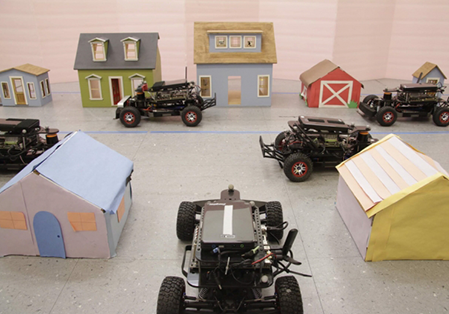
MIT and Toyota researchers have designed a new model to help autonomous vehicles determine when it’s safe to merge into traffic at intersections with obstructed views.
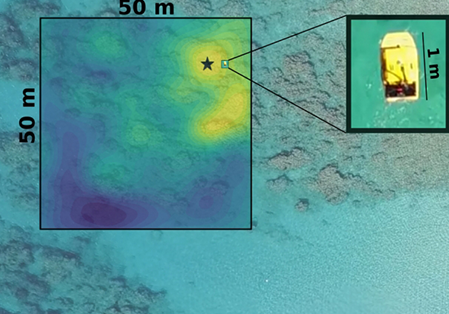
An autonomous robotic system invented by researchers at MIT and the Woods Hole Oceanographic Institution (WHOI) efficiently sniffs out the most scientifically interesting — but hard-to-find — sampling spots in vast, unexplored waters.