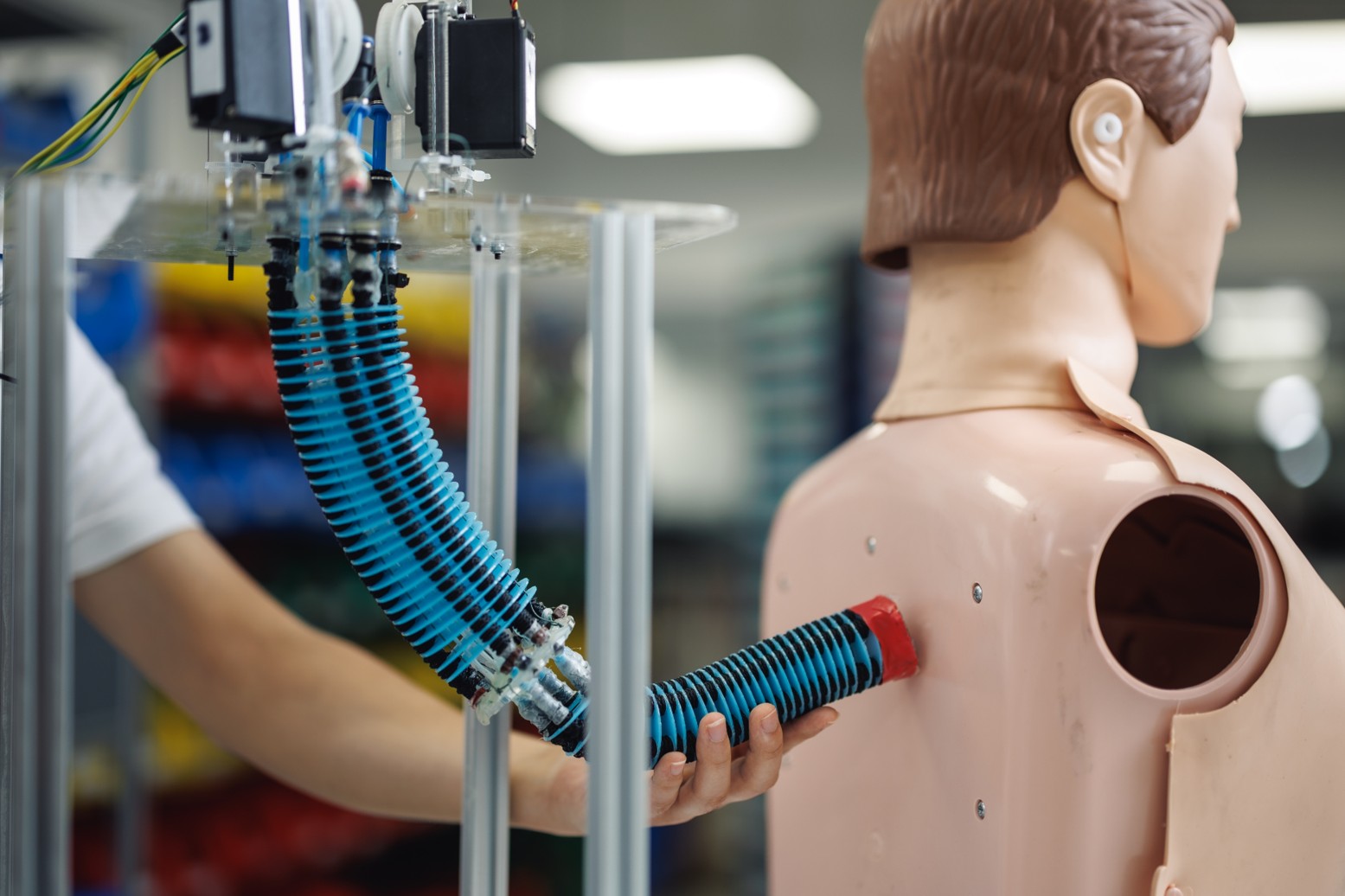
Singapore-MIT Alliance for Research and Technology’s (SMART) Mens, Manus & Machina (M3S) interdisciplinary research group, and National University of Singapore (NUS), alongside collaborators from Massachusetts Institute of Technology (MIT) and Nanyang Technological University (NTU Singapore), have developed an AI control system that enables soft robotic arms to learn a wide repertoire of motions and tasks once, then adjust to new scenarios on the fly without needing retraining or sacrificing functionality. This breakthrough brings soft robotics closer to human-like adaptability for real-world applications, such as in assistive robotics, rehabilitation robots, and wearable or medical soft robots, by making them more intelligent, versatile and safe.
MIT researchers have identified significant examples of machine-learning model failure when those models are applied to data other than what they were trained on, raising questions about the need to test whenever a model is deployed in a new setting.
Gemstones like precious opal are beautiful to look at and deceivingly complex. As you look at such gems from different angles, you’ll see a variety of tints glisten, causing you to question what color the rock actually is. It’s iridescent thanks to something called structural color — microscopic structures that reflect light to produce radiant hues.