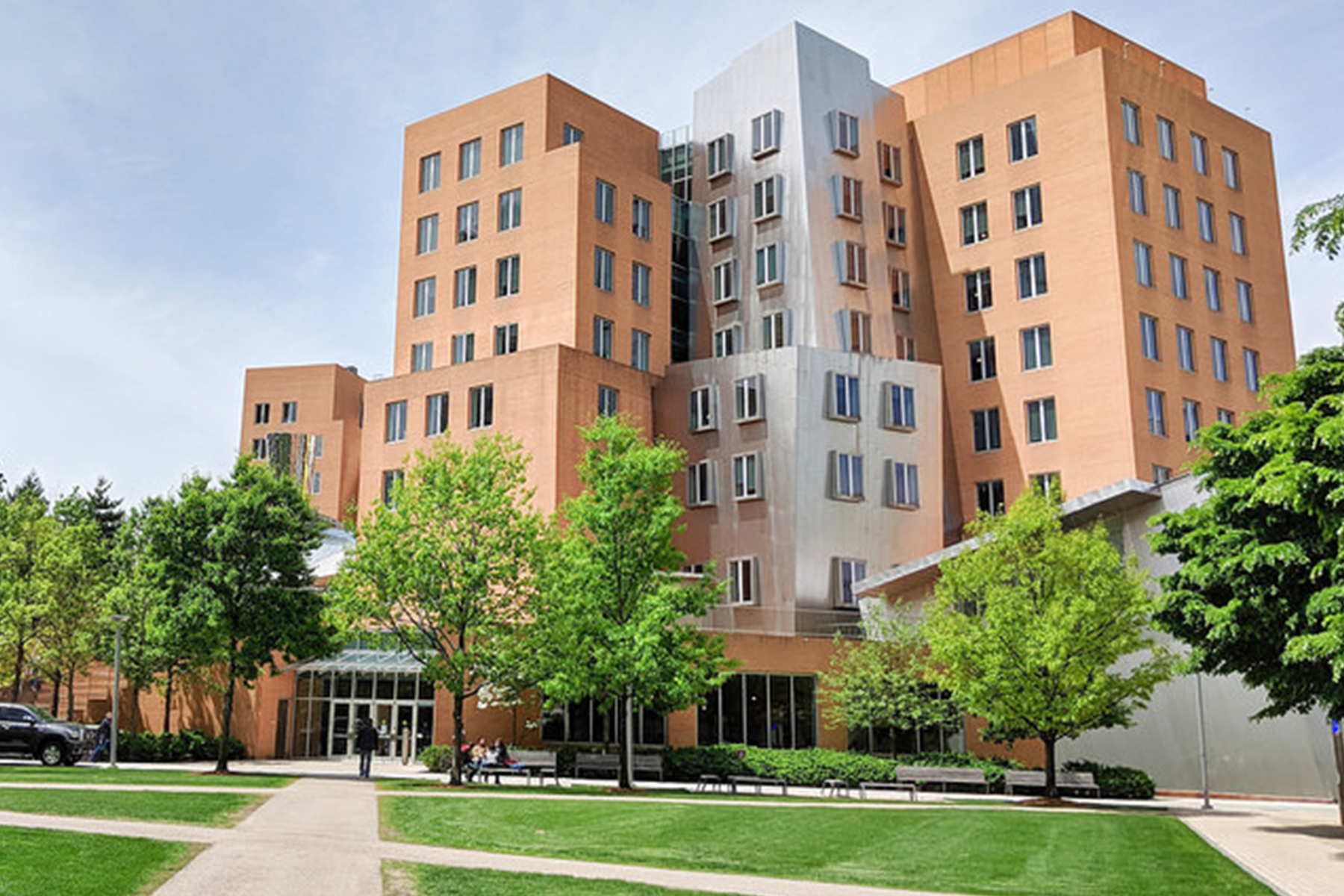
Photo courtesy of MIT Museum
Audrey Woods, MIT CSAIL Alliances | November 17, 2026
A new resource from MIT FutureTech tracks how CPUs and GPUs have changed over time, giving researchers and technology leaders one trusted place to see where computing hardware has been and where it's going next.
For most of computing history, technology leaders didn’t have to worry too much about the details of their hardware. Moore's Law reliably delivered more transistors and faster processors each generation, improving nearly every application with them. The decisions that mattered were how many servers to buy and how often to replace them, not so much the processors themselves.
That era is over, and the MIT Processor Database aims to help organizations deal with what took its place. Led by MIT FutureTech Project Director Neil Thompson, this project is an effort to create the most comprehensive source of information for hardware chips. The database will offer a foundational tool for industry leaders weighing critical hardware decisions in the age of AI, engineers building new chips, and researchers studying trend lines in economics, computing, AI adoption, and more. As MIT Professor and bestselling author Charles Leiserson says, “It's really useful when you're looking toward the future to understand what happened in the past.”
BUILDING ON EXISTING INFRASTRUCTURE: THE STANFORD DATABASE
The MIT Processor Database builds on a previous and well-loved tool, the CPU Database from Stanford. Emanuele Del Sozzo—a Research Scientist at MIT FutureTech working with Dr. Thompson—explains that the Stanford database “was a really useful resource for researchers who were interested in collecting data about old or current models of CPUs and looking at their details.” But the database stopped being updated in 2016, making it increasingly irrelevant as technology leapt forward.
Thompson felt this absence while studying the death of Moore’s Law, a decades-long trend of predictable hardware improvement delivering widespread gains. This change—to what he calls “one of the strongest forces that has reshaped society”—can best be seen by “looking at the technical characteristics of these chips and how they're evolving, which helps you understand what's going on in the world.” Thompson himself used the Stanford database while working on projects like his landmark paper in Science “There’s plenty of room at the Top: What will drive computer performance after Moore’s law?” But even then the data were outdated, and the computing landscape was changing with the rise of GPUs and the compute-hungry demands of AI.
“The idea is to build on top of that Stanford Processor Database and expand it with modern CPUs, as well as expand the resulting database with other types of computing devices,” says Del Sozzo. As of today, the database focuses mainly on CPUs and GPUs, but Del Sozzo and his colleagues are planning to include FPGAs and AI-specific processors in future releases. The database will also include a dataset with results from well-established benchmarks for CPUs, such as the SPEC benchmarks which will enable users to compare real performance across different CPUs and observe the performance progress. By combining team efforts with guidance from the Steering Committee and user feedback, the group plans to fill the gap Stanford left and keep this database continuously updated and relevant.
RESEARCH & INDUSTRY: THE IMPORTANCE OF LOOKING BACK
Shekhar Borkar—a member of the Steering Committee—has been designing chips for over 40 years. He’s worked for Intel, Qualcomm, and was the founding member of the Circuit Research Lab. “I've seen it all,” he says of chip design. “I've used the Stanford tool, and before that, I had my own database.” But he’s been frustrated by the lack of an up-to-date, comprehensive place to go for processor data. He describes the MIT Processor Database as a tool of “immense use to those who are defining new chips. Let's say I'm at Intel and I want to create a new processor. When I say ‘this is the processor that I'm going to create and these are the features I'm going to put in there,’ I want to find out what my competition is doing and what my competition has done in the past. Now I can search a database. I can get the latest and the greatest of what my competition has been doing over the years. It's really important.” He compares it to one-stop shopping and says he’ll definitely be using the database when it’s ready. “I already have an account there.”
Leiserson, another member of the Steering Committee, offers the researcher perspective on the new database. “Having this kind of data available can be invaluable to understanding what we should work on in our research.” As a scholar of Moore’s Law and Dennard Scaling, he says “It's really helpful to be able to see what happened and why things are the way they are, because we're going to have more things happen. Moore's law is over. We will have some additional shrinks, additional scaling down of feature size, but not at the rate that we saw during the Moore era, where it was doubling every 2 years. We're not anywhere close to that at this point.” To understand the future of computing, Leiserson argues that it’s critical to know “what happened in the past, what's the same as in the past, what's different from the past.” Thompson agrees. “Understanding these trends is very, very central to what [FutureTech] is doing, because it says, ‘here is how fast the hardware is changing.’ That gives you one of the crucial pieces to say what AI is going to be able to do in the coming years.”
A third potential category of users, Thompson imagines, will be Chief Technology Officers. “In an era where that underlying trend keeping so many technical features in-sync has stopped, you now have to make many more trade-offs.” Modern CTOs have to pay close attention to how their processors relate to AI strategy and decide which GPUs or CPUs to invest in. “All of a sudden you have many, many more choices you have to be actively managing. For CSAIL Alliances members that could be particularly useful, because they can understand both the range of options, and also how those options are changing.” As the team integrates more measures and processors into the database, Thompson believes the tool will become even more useful as a measure of comparison. “Everyone says in their sales press release that their chip is the very best, but of course, once you actually measure them, you get more variation there.”
FUTURETECH’S VISION: HOW TO GET INVOLVED
FutureTech’s mission is to understand the foundations of progress in computing, studying trends, how they underpin economic prosperity, and how they can be harnessed to sustain and promote productivity growth. The Processor Database is a key piece in that puzzle. “What we want to do is not just say, what are the capabilities of AI today, but what are the capabilities and impacts it's going to have tomorrow, next year, or 5 years from now. To do that projection well, you have to understand what's going on in hardware, what's going on in algorithms, and how those are changing over time.” As hardware becomes more capable, that will lead to more powerful models and more cost-effective deployments. “All of these things really matter for whether firms adopt and how labor is going to be using AI.”
For Leiserson, it’s uniquely valuable that this tool came out of MIT and CSAIL. “MIT brings integrity. People know that if there are errors, they'll be corrected, and that it has been done thoughtfully by people who know what they're doing. We have established a very strong reputation for doing technical stuff right.”
Whether you’re a researcher interested in historical trends, a semiconductor engineer comparing GPU or CPU metrics, a CTO considering technology options, or just curious about the state of hardware, Del Sozzo invites you to try out the database. Users can share feedback or add information via the contribute button available on each device page. Thompson says, “We'd love for people to send in suggestions, because we want this to be something that is of a lot of practical use.” More broadly, he invites organizations thinking strategically about AI to get in touch. If companies are thinking about how they organize themselves, how people will work together, or what’s going to be valuable in the age of AI, “Those kinds of questions really feed into the big strategic questions that FutureTech cares about. In so much as organizations are thinking about those, we'd love to engage with them.”
The MIT Processor Database is a joint research effort, led by MIT FutureTech and supported by Jonathan Koomey and Zachary Schmidt of Koomey Analytics, Kenneth Flamm, and Sylvia Downing of Sylvility Consulting.
Sign up for the MIT Processor Database here.
To stay informed about other tools and resources coming out of MIT CSAIL, sign up for our newsletter.